Exfoliation is one of the most important steps in maintaining smooth, glowing, and healthy skin—but for people with sensitive or reactive skin, it can also be one of the most challenging. While exfoliating helps remove dead skin cells, unclog pores, and boost the absorption of skincare products, choosing the wrong type of exfoliator can lead to irritation, redness, and barrier damage. This is why understanding the difference between a papaya enzyme scrub vs physical scrub is crucial.
Many people automatically reach for physical scrubs because they offer immediate smoothness, but the truth is that abrasive scrubs are not always the safest choice for delicate skin. Enzyme exfoliation, especially from papaya enzymes, offers a gentler, more effective alternative. In this guide, we’ll explore how papaya enzymes work, why they outperform traditional scrubs, and how you can exfoliate safely without harming your skin.
What Are Physical Scrubs?
Physical scrubs are traditional exfoliators that rely on small particles to manually buff away dead skin cells. These can include ingredients like sugar, salt, crushed walnut shells, apricot kernels, and even microbeads. When massaged onto the skin, these particles scrape off dead skin cells, leaving the skin feeling smoother almost instantly.
However, this type of exfoliation can be too harsh, especially for sensitive skin. Many physical scrubs contain irregular, rough particles that can create microtears in the skin’s surface. These tiny injuries may lead to inflammation, increased sensitivity, redness, and a compromised skin barrier. For someone looking for a gentle exfoliator for sensitive skin, physical scrubs often do more harm than good.
Over time, using harsh scrubs can also worsen conditions like rosacea, eczema, and acne, and contribute to long-term irritation. While they may work for people with thick or very oily skin, those with delicate complexions should proceed with caution.
How Papaya Enzyme Scrubs Work
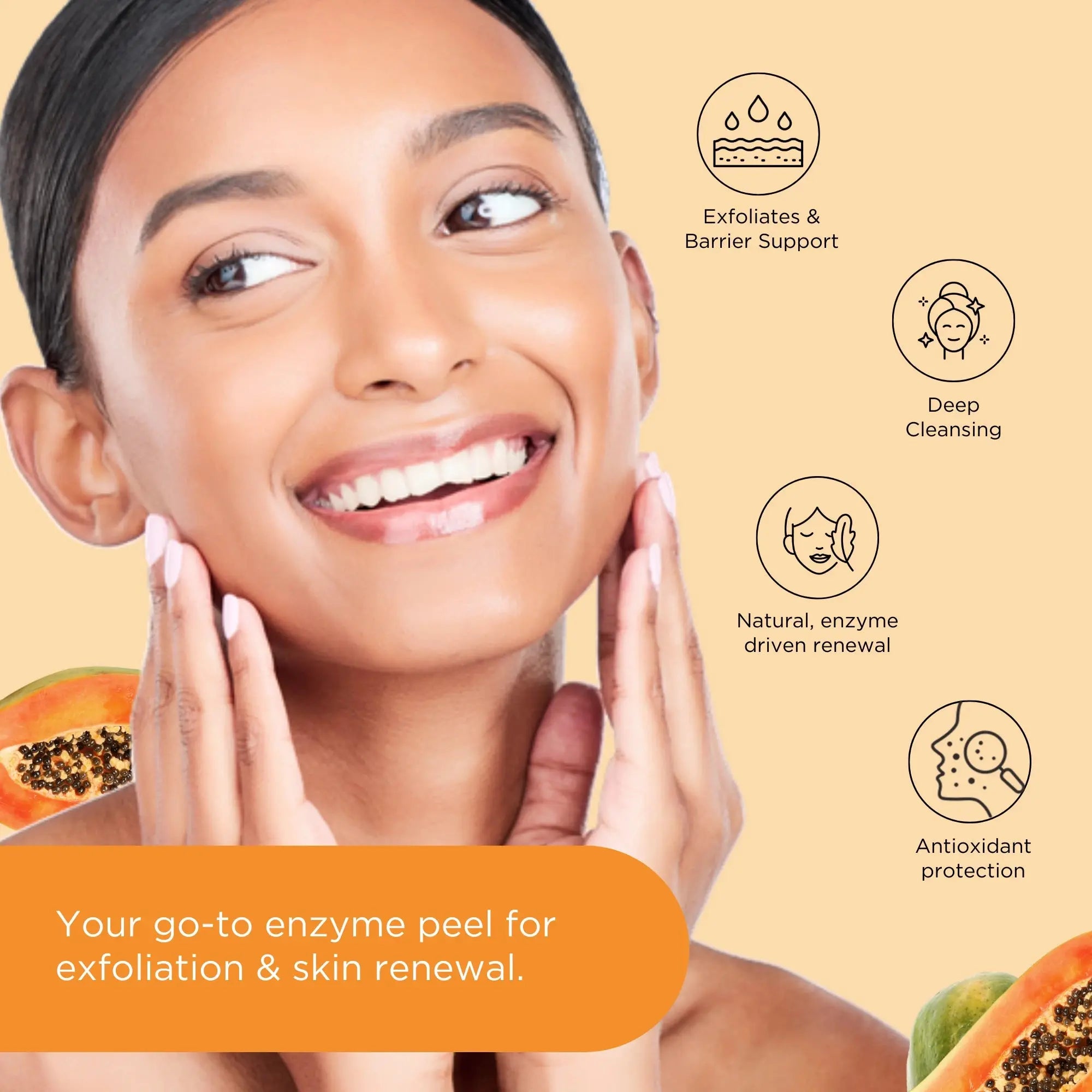
Papaya enzyme scrubs use natural fruit enzymes, primarily papain, to break down and dissolve dead skin cells without physically scrubbing the skin. This type of exfoliation is known as enzymatic exfoliation, and it works differently from abrasive scrubs.
Papain works by digesting the proteins that hold dead skin cells together on the skin’s surface. Instead of scraping or scratching the skin, papaya enzymes gently loosen and lift away dull, flaky skin. Because the process is chemical rather than mechanical, it’s far less likely to irritate sensitive or acne-prone skin.
An enzyme scrub for sensitive skin feels smooth and creamy rather than gritty. It offers the benefits of exfoliation without the risk of damaging the skin barrier. Papaya enzymes also contain natural antioxidants that help brighten the skin, making them a dual-purpose ingredient that exfoliates and nourishes simultaneously.
Explore our skin wellness tips to learn how to exfoliate safely and maintain a smooth, radiant complexion every day.
Papaya Enzyme Scrub vs Physical Scrub: Detailed Comparison
When comparing a papaya enzyme scrub vs physical scrub, the differences become clear in terms of texture, safety, and results.
Texture:
Physical scrubs contain particles that can feel rough on the skin. Even finely milled scrubs can be too abrasive for sensitive skin. Papaya enzyme scrubs, on the other hand, are usually smooth gels or creams with little to no grit. They exfoliate without friction, making them perfect for delicate skin types.
Method of Exfoliation:
Physical scrubs rely on manual movement to slough off dead skin. This means your pressure determines the intensity, which can easily lead to over-exfoliation. Papaya enzyme scrubs work enzymatically; they dissolve dead skin cells without needing harsh rubbing.
Risk of Irritation:
Physical scrubs can cause microtears, increased inflammation, and heightened sensitivity. This makes them unsuitable for those with reactive skin or ongoing skin concerns. Enzyme scrubs are gentle, non-abrasive, and much less likely to cause irritation or redness.
Results:
Both methods can leave the skin smooth, but enzyme exfoliation offers additional benefits like brightening, reduced dullness, and a healthier glow. Enzyme scrubs can often be used more frequently because they don’t damage the skin barrier, making them a better choice for regular maintenance.
While physical scrubs may help with very stubborn dry patches, most people—especially those seeking a gentle exfoliator for sensitive skin—will find that papaya enzymes offer safer, more consistent results.
Papaya Enzyme Peel Benefits for Sensitive Skin
Papaya enzyme peels and scrubs offer a wide array of benefits, especially for sensitive or easily irritated skin.
One of the biggest advantages is their natural brightening effect. Papain gently removes the layer of dead cells that dull the complexion, revealing fresher, more radiant skin underneath. This process also helps even out skin tone and reduce mild discoloration over time. For those dealing with rough texture, enzyme exfoliation helps smooth the skin without harsh scrubbing.
Another major benefit is how effectively papaya enzymes unclog pores. Unlike abrasive scrubs that push debris around the skin, papain dissolves buildup, helping reduce blackheads, congestion, and dullness. This makes papaya enzyme peels ideal for acne-prone or combination skin types that still need gentle care.
One reason professionals often choose enzyme peels for sensitive clients is because they exfoliate without disrupting the skin barrier. They are mild, calming, and far less likely to cause redness or irritation—major reasons papaya enzyme peel benefits make them a top choice for reactive skin.
How to Exfoliate Sensitive Skin Safely
Exfoliating sensitive skin requires a thoughtful routine designed to avoid irritation while still reaping the benefits of smoother, healthier skin. Here’s how to do it safely:
1. Always Patch Test First
Before applying any exfoliator, test it behind your ear or on your wrist to ensure your skin tolerates the formula.
2. Start Slow
Begin with exfoliating once a week. As your skin adjusts, you can increase to two times weekly if your skin responds well.
3. Choose an Enzyme Scrub for Sensitive Skin
Enzymatic exfoliators are gentle, barrier-safe, and perfect for consistent use. They prevent the irritation that often comes with physical scrubs or strong acids.
4. Avoid Over-Exfoliating Ingredients
Don’t combine physical scrubs, enzyme exfoliators, and strong AHAs or BHAs in the same routine. Stick to one exfoliating method at a time.
5. Pair Exfoliation With Soothing Ingredients
Follow up with ingredients like aloe vera, ceramides, hyaluronic acid, and niacinamide to calm and hydrate the skin.
6. Skip Alcohol-Based Toners or Stripping Cleansers
These can irritate the skin further and disrupt your barrier, especially after exfoliation.
7. Protect Your Skin With Sunscreen
Any form of exfoliation makes your skin more sensitive to the sun. Always apply SPF 30 or higher daily. Finish your routine by using a broad-spectrum sunscreen that shields freshly exfoliated skin from UV damage and premature aging
By following these steps, you’ll know how to exfoliate sensitive skin safely without risking irritation.
Who Should Avoid Physical Scrubs and Switch to Enzymes?
Certain skin types and concerns respond far better to enzyme exfoliation than physical scrubs. If you fall into one of these categories, switching to a gentle enzyme exfoliator is a smart decision:
Rosacea-Prone Skin:
Physical scrubs can trigger flare-ups, worsen redness, and increase inflammation.
Acne-Prone Skin:
Scrubbing can rupture active breakouts and spread bacteria. Enzymes exfoliate without friction.Learn more about gentle acne care and safe exfoliation techniques in our acne-friendly skincare guide for clearer, healthier skin
Eczema or Dermatitis:
Rough scrubs can damage an already compromised skin barrier, while enzymes gently remove dead skin without irritation.
Highly Sensitive or Reactive Skin:
If your skin stings, burns, or reddens easily, enzyme scrubs offer the safest alternative.
Barrier-Damaged Skin:
Those recovering from over-exfoliation or harsh treatments should avoid abrasive products.
For all these groups, an enzyme scrub for sensitive skin—especially papaya enzyme scrubs—is the ideal way to exfoliate safely.
Conclusion
Choosing the right exfoliator makes a world of difference, especially for sensitive skin. When comparing a papaya enzyme scrub vs physical scrub, it’s clear that enzyme exfoliation offers superior safety, comfort, and long-term skin health benefits. Papaya enzymes gently dissolve dead skin cells, brighten the complexion, and maintain a healthy skin barrier—all without the harsh abrasion of physical scrubs.
If you’re looking for a gentle exfoliator for sensitive skin, papaya enzyme scrubs are the perfect solution. They deliver smoother, glowing skin without irritation and are suitable for regular use. In the long run, gentle and consistent exfoliation always outperforms aggressive scrubbing.
Frequently Asked Questions
1. Can I use a papaya enzyme scrub daily if I have sensitive skin?
Most people with sensitive skin can use enzyme scrubs 2–3 times a week. Daily use may be possible for some, but start slowly and pay attention to how your skin reacts.
2. Are enzyme scrubs safe for acne-prone skin?
Yes. Enzymes exfoliate without friction, reducing the risk of spreading bacteria or irritating breakouts.
3. What should I avoid after using an enzyme exfoliator?
Avoid retinol, strong acids, and alcohol-based products for at least 24 hours.
4. How do enzyme scrubs differ from AHA/BHA chemical exfoliants?
Enzymes are gentler and work on the skin’s surface, while AHAs/BHAs penetrate deeper and can be harsher for sensitive skin.
5. Is papaya enzyme peel suitable for rosacea-prone skin?
Yes, in most cases. Enzymes are one of the safest exfoliation methods for rosacea, but patch testing is recommended.
6. Can I combine physical and enzyme exfoliation in the same week?
It’s best not to. Using both increases the risk of over-exfoliation. Stick to one method—preferably enzymes for sensitive skin.