India’s intense UV exposure makes mineral sunscreen SPF 70 one of the most important products in any skincare routine. This comprehensive guide covers everything you need to know about choosing, applying, and getting the most from a high-SPF mineral sunscreen for your face.
Why SPF 70 for Indian Skin?
India sits close to the equator, receiving some of the highest UV Index readings globally — regularly 8–11+ (Very High to Extreme) across most regions year-round. At these UV levels:
- SPF 30 blocks ~97% of UVB rays
- SPF 50 blocks ~98% of UVB rays
- SPF 70 blocks ~98.6% of UVB rays
The additional protection matters when baseline UV exposure is already extreme. Combined with the fact that Indian skin is highly prone to PIH (post-inflammatory hyperpigmentation) from sun exposure, SPF 70 provides a meaningful safety margin.
Why Mineral Sunscreen?
Mineral sunscreens use physical UV blockers (Zinc Oxide and/or Titanium Dioxide) that sit on the skin’s surface and reflect UV rays. Advantages over chemical sunscreens:
- Immediate protection — No 20-minute wait after application
- Gentle for sensitive skin — Lower risk of irritation and contact allergy
- Broad-spectrum — Zinc Oxide covers full UVA + UVB spectrum
- Photostable — Doesn’t degrade in sunlight unlike some chemical filters
- Non-hormonal — Doesn’t penetrate or affect hormonal pathways
Minskinn Mineral Sunscreen SPF 70

Minskinn Mineral Sunscreen SPF 70 is formulated with Zinc Oxide and Titanium Dioxide for broad-spectrum UVA + UVB protection at SPF 70:
- Immediate protection — no waiting period after application
- Non-comedogenic — won’t clog pores
- Lightweight, non-greasy formula suitable for daily use
- Free from parabens, oxybenzone, and artificial fragrances
- Suitable for all skin types including sensitive and acne-prone
How to Apply Mineral Sunscreen Correctly
- Amount: 1/4 teaspoon (approximately 1.5ml) for face and neck — most people underapply, significantly reducing SPF
- Timing: Apply as the final AM skincare step, before makeup
- Application: Dot on forehead, cheeks, nose, chin, and neck. Blend gently — don’t rub vigorously
- Reapplication: Every 2 hours of direct sun exposure, or after swimming/sweating
Complete Morning Routine with SPF 70
- Cleanse: Minskinn Multivitamin Creamy Face Cleanser
- Tone: Dewy Glass Look Toner
- Serum: Brightening Serum (Vitamin C)
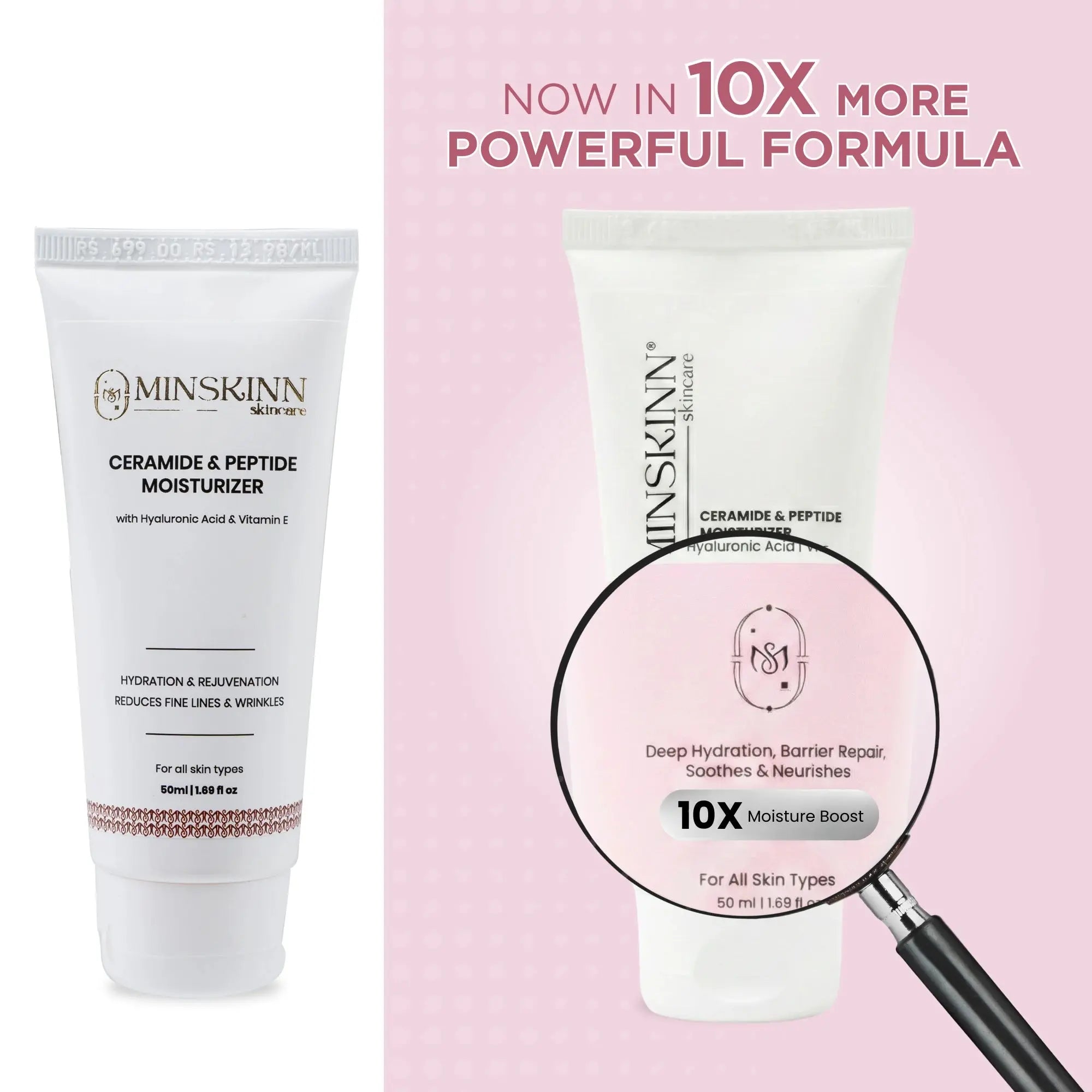
- Moisturize: Ceramide Peptide Moisturizer
- Protect: Mineral Sunscreen SPF 70
Common Sunscreen Mistakes
- Not using enough — Half the recommended amount cuts effective SPF by more than half
- Applying only to face — Neck, décolletage, and hands also need protection
- Skipping on cloudy days — Up to 80% of UV penetrates cloud cover
- Not reapplying — SPF diminishes with sweat, sebum, and time
- Applying after makeup — Sunscreen must be the final skincare step, before makeup
Frequently Asked Questions
Is SPF 70 necessary or is SPF 50 enough?
In India’s UV Index environment, SPF 70 provides a meaningful additional buffer. It’s especially valuable because most people underapply sunscreen — SPF 70 applied at half the dose still provides roughly SPF 35+ protection.
Does mineral sunscreen leave a white cast?
Modern mineral sunscreen formulas with micronized Zinc Oxide have significantly reduced white cast. Minskinn’s formula is designed for Indian skin tones with a lightweight, sheer finish.
Can I use mineral sunscreen on acne-prone skin?
Yes — mineral sunscreens are non-comedogenic and often recommended for acne-prone skin. Zinc Oxide has mild anti-inflammatory properties that can also help calm acne-prone skin.
How is mineral sunscreen different from regular (chemical) sunscreen?
Mineral sunscreens use physical blockers (Zinc Oxide, Titanium Dioxide) that reflect UV on the skin surface. Chemical sunscreens absorb UV and convert it to heat. Mineral types are gentler, provide immediate protection, and are safer for sensitive skin.
Should I wear sunscreen indoors?
Yes — UVA rays penetrate glass windows. If you sit near windows or spend time in a car, daily sunscreen is still important for preventing photoaging and pigmentation.